AC Baggage Cars 300-301 – Part 2: Ends and Roof

With two sides finished, I moved on to preparing the ends and cutting the roof to length.

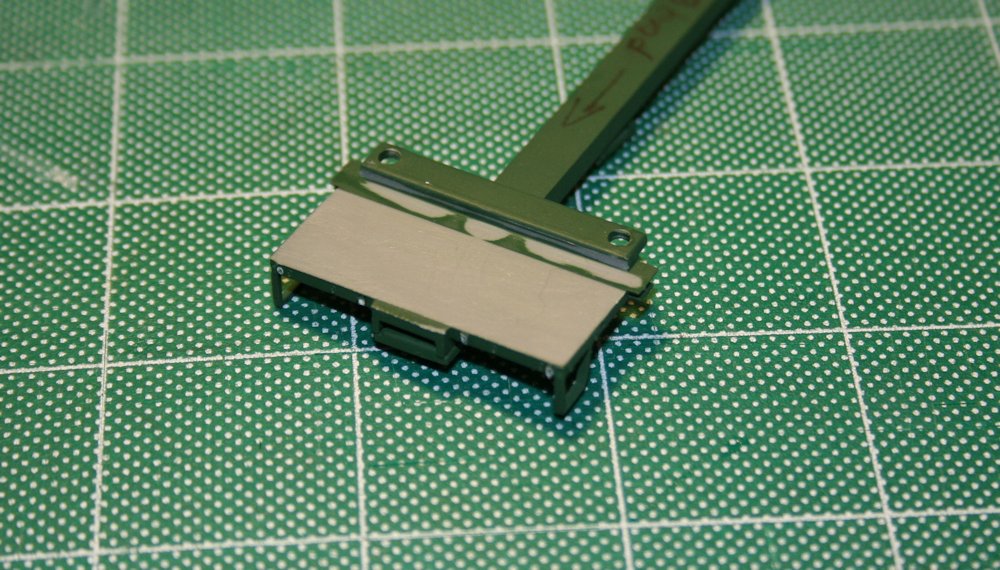
The ends from the Train Station Products Pullman-Standard core kit just needed a minor adjustment near the bottom to handle the curved skirts at the end of the cars. The stock ends have a bit of thick bracing all the way down to the bottom, which interfered with the curved skirt on the USP side. I cut this back with my razor saw, and also shortened up these tails and filed a different curve profile into them to match my sides. A picture being worth a thousand words, the below image comparing the modified end (marked with an “A”) to the stock end probably explains it better and clearer than I can:

IMG_8427

Necessary to make the sides fit the ends properly, but pretty simple.

With the ends taken care of, it was time to tackle the roof. These baggage cars are quite a bit shorter than a full size 85′ coach, so the roof needed to be cut down to length. I ended up making a total of four cuts; with the extra piece that’s removed taken out, there were three places where the roof is spliced back together.

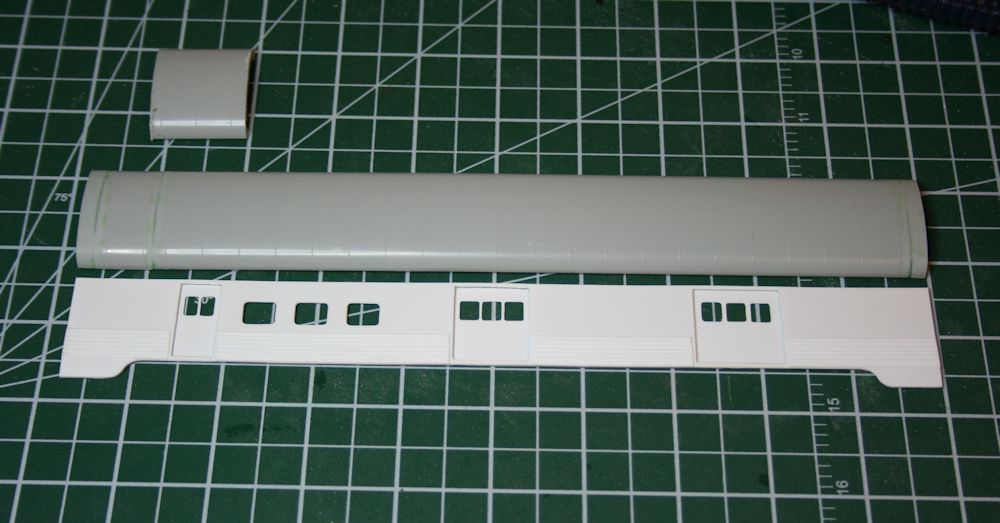
In a lot of the reference photos I have it’s a little difficult to make out the seams in the roof, but it appears from one or two photos that the third panel from the one end is a fair bit narrower than the others. This then is where the cuts were made to remove the extra bit of roof. I also cut the two end-most panels to narrow them down a little. A lot of careful filing to clean up the cuts and remove extra material to bring the length down to exactly the right amount for the splices, and we end up with something like this:
IMG_8410

You can see I’ve also installed the baggage doors from the kit. Like the sides, these are .020″ styrene sheet with the window openings milled out. They’re cut oversize to the opening so they can be glued to the back of the clear base. I made one modification here to the doors, trimming away the extra material below the door in order to clear the floor.

Here’s the underside of the roof, showing styrene strip used to hold the spliced roof together:

IMG_8422

You can also see in the above image that I cut away short stretches of the inner ridge on the roof in order to clear the doors on the sides.

With the ends and roof prepared, next I can assemble the car’s body!
AC Baggage Cars 300-301 from Union Station Products Kit – Part 1

With no family commitments on the Monday of the Thanksgiving weekend, I decided to make a deliberate effort to take advantage of a day off actually spent at home to do some work on various model projects. One project I’ve been working on today is a model of one of the Algoma Central’s two ex-Denver & Rio Grande Western baggage-express cars.

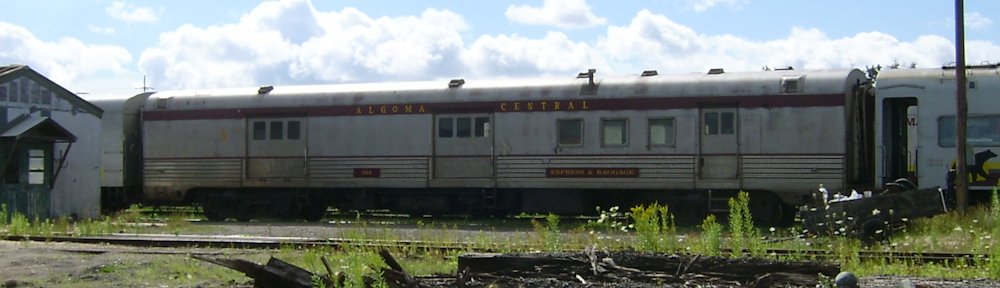
These two cars are a little unusual in that the lower portion is clad in stainless steel fluting, but the upper part of the car is smooth. Built as baggage/RPO (railway post office) cars by Pullman-Standard, these cars were originally ordered by the Chessapeak & Ohio Railroad, but ended up being delivered instead to the D&RGW in 1950. The Algoma Central acquired two of the three D&RGW cars in 1973, numbering them 209-210. In 1981 when the 200 series GP38-2s were delivered, all of the AC baggage cars were renumbered into the 300 series, and these became AC 300-301.

Here’s the 301 at the Steelton yard shop tracks in 2004:

SAMSUNG DIGIMAX 360

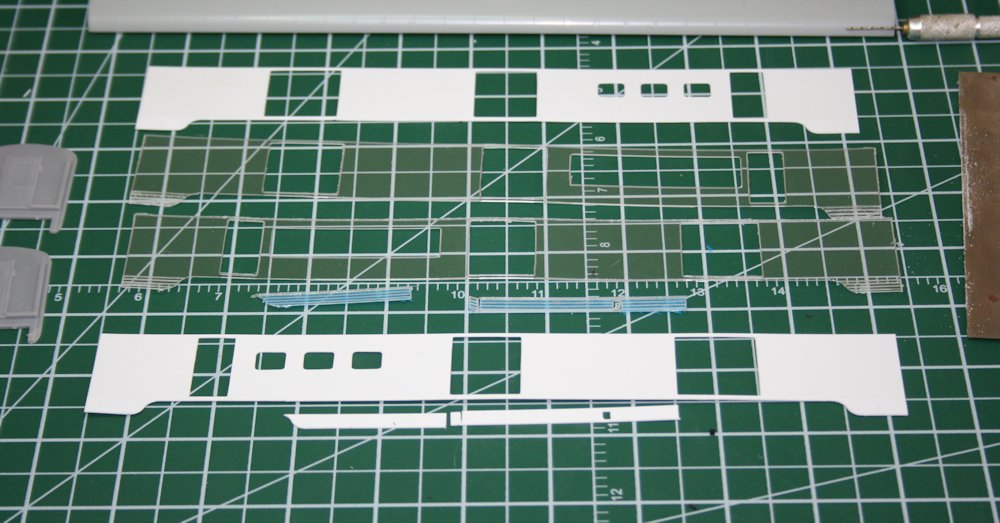
The basis for this model is a car side kit from Union Station Products. It’s one of a group of such kits I acquired back in July. (Actually I got two copies of this particular kit, so I will be able to model both car numbers 300 and 301.) The kit consists of a .020″ white styrene side and a .040″ clear plastic (acrylic?) core that are meant to be laminated together. The core has cut out sections for the windows, these to be applied later, after painting. The side kits are then meant to be used with passenger car core and detail kits from Train Station Products (which USP also resells) to provide the roof ends and underframe for the car.

The Algoma Central removed the skirting from these cars when they acquired them, so the first stop was to perform some minor surgery on the car sides to cut away the skirting between the trucks:

IMG_8399

This was easily accomplished with a straightedge and many light passes with a sharp X-acto knife to cut away the unwanted material. Following that, it was essentially a matter of cleaning up the various pieces before assembly.

The skirting area on the clear core has a bunch of horizontally scored lines in it so that the skirts can be curved inward using pliers. (The smooth side is the outside, the cut side curves inwards.) I used a a pair of flat (not needle-nose) pliers to gently curve the remaining skirting at the car ends. Just work gently and slowly and evenly along the skirt you’re bending.

The kit instructions suggest you start with the skirting when you glue the side and core together. I started with the skirt at one corner of the car and careful to keep the whole side square and lined up, glued it to the clear core with CA glue, applied with a toothpick. After holding that in place and allowing it to set for a few moments, I proceeded out from that corner along the side of the car, applying glue to a section up to a door opening, and laminating that portion of the side. I did not go ahead and glue the skirt at the other end right away – you want to start at one end and work your way down; if you’re off by even a fraction of a millimeter you can end up with a major ripple in the side.

Once the side and core were laminated together, I spent some time going over the outer edges and also the edges of the door frames with a small flat file to clean up all the edges and remove burrs from the manufacturing process. (The sides and cores are CNC milled.)

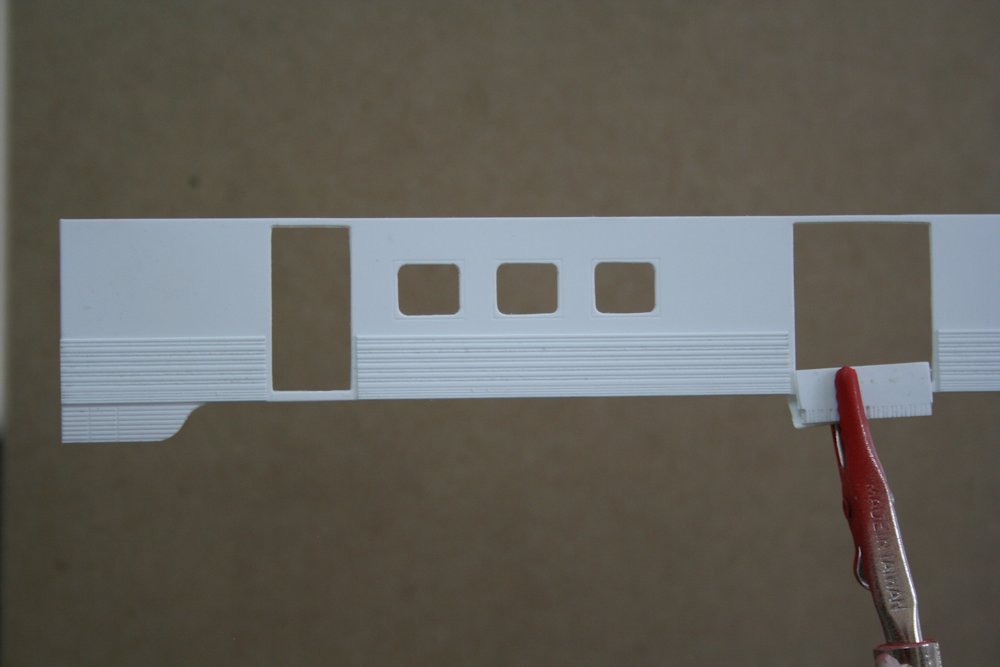
For their fluted side cars, Union Station provides a separate strip of fluting that is laminated onto the surface of the car side. This was easy to cut to length with my Chopper and apply to the side. I attached these using Testor’s liquid cement. I applied a small amount to the back of the fluting strip to tack it in place, and once properly aligned, applied cement sparingly around the edges of the strip with a very fine point brush. This wicks into the joint and makes a very clean and permanent joint.

Here’s how the one side looks so far:

IMG_8403

Just need to finish the other side (actually x3 because I’m doing two of this car) and then work on the roof and underframe, which require a certain amount of cutting and splicing because the baggage cars are shorter than a typical 85′ coach which the core kits are designed for.

ACR Survivors

On my trip to Sault Ste Marie to ride the Tour of the Line, I got to see and photograph a few examples of surviving original AC equipment.

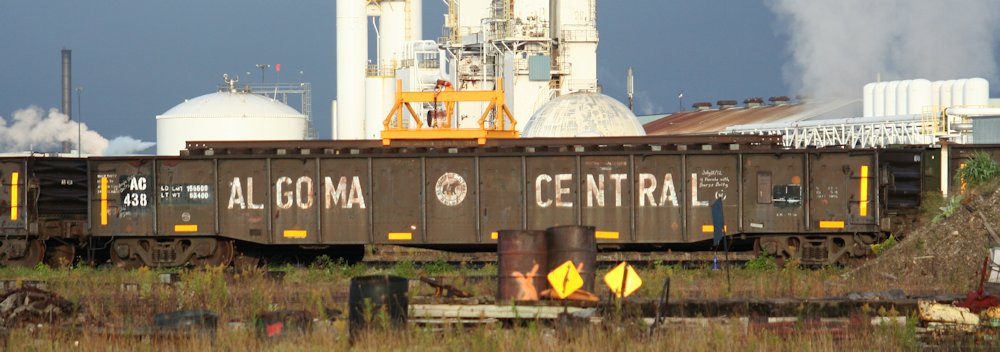
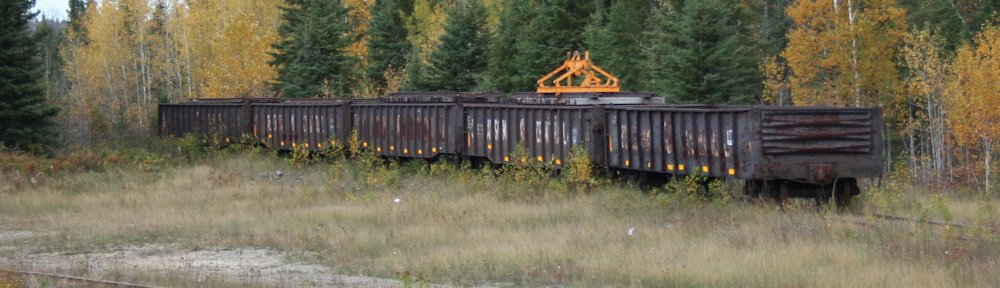
At the yard at Steelton was a string of 5 AC gondolas loaded with track panel sections for emergency track repair and replacement work.

IMG_7351IMG_7350IMG_7349 IMG_7356

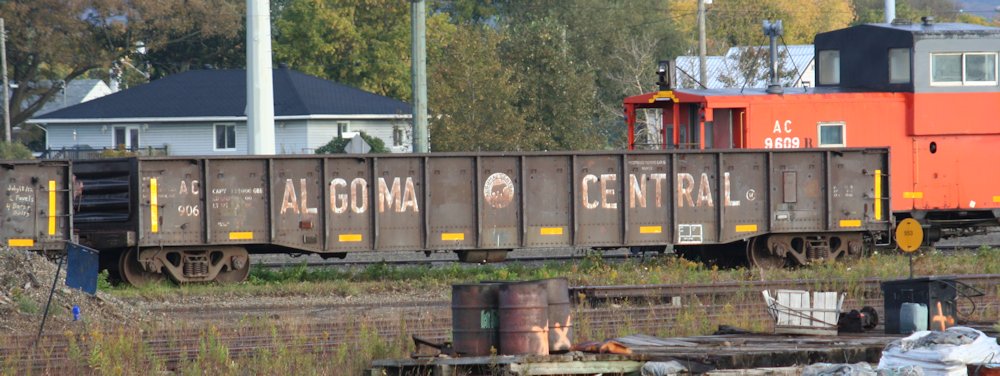
A similar set of 5 gondolas was also on hand at Hawk Junction. Note that the closest car in this string is an older 48′ gondola!

IMG_7559.jpgIMG_7981IMG_7979

These AC gons are extremely rare now. The only remaining examples are in maintenance service like these, having long been removed from any sort of revenue service. These could even be among the last 10 survivors (of the 52′ gons), although there could be a few more still in similar service on former WC lines.

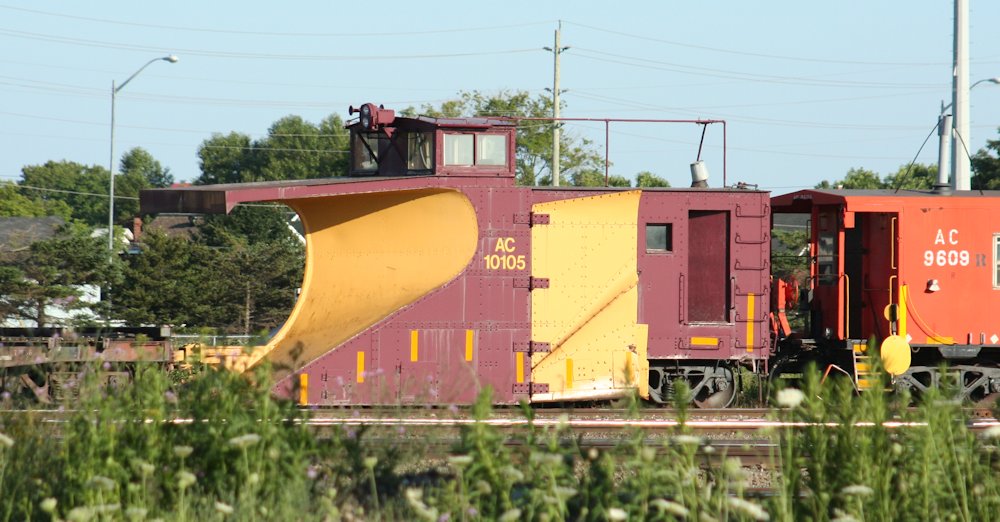
Also at Steelton yard is one of the former AC steel cabooses (acquired secondhand by the AC from Canadian Pacific around 1990-91) and one of the AC’s two original steel snowplows (although the plow has several years before been repainted into WC maroon and gold colours). These were screened by the gondolas and other junk and equipment from where the passenger train boards, but fortunately I got shots from the other side using my 200mm zoom lens on my July trip:

IMG_5973IMG_5982

I also saw a few AC marked pulpwood flatcars on both trips, although it’s hard to call these original survivors, since the grey AC 238100 series pulpwood cars were rebuilt from former CP cars in 1998, well after the Wisconsin Central takeover.

Also, though it was located much farther back in the shops area and wasn’t accessible for photographs, heavyweight business car “Agawa” is still hanging around the former AC property. I have no information on the disposition of former AC business car “Michipicoten”.

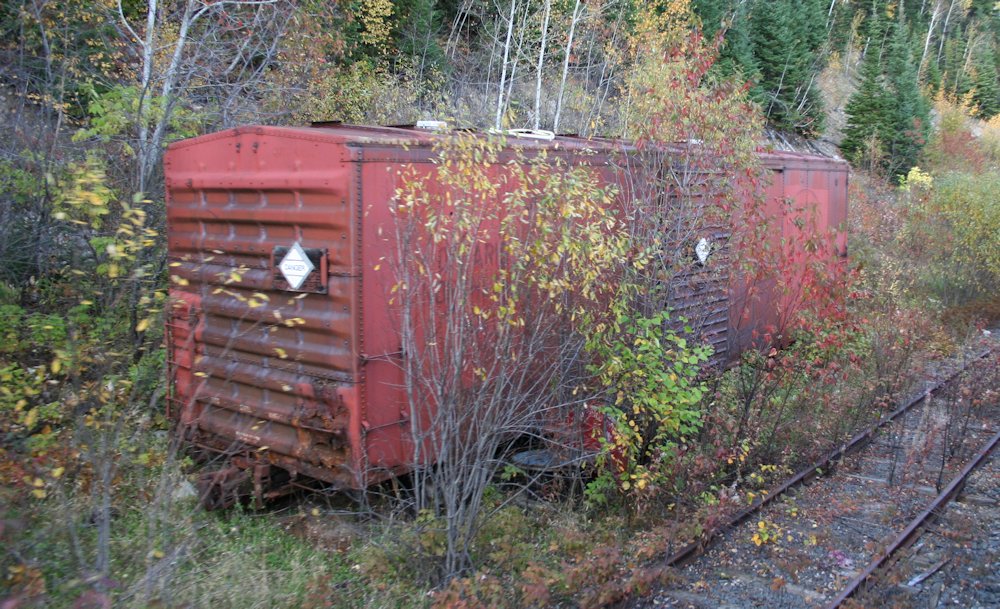
Finally, I’m not sure whether you can consider this a “survivor”, but this old ex-Ontario Northland work boxcar was sitting in the weeds alongside a maintenance spur near the Oba lake “floating” trestles:

IMG_7630

Not bad for 18 1/2 years after the end of the Algoma Central as an independent railway. (The WC sale was official on Feb 1, 1995.)

AC 3100 series wood boxcars from Accurail’s 40′ wood boxcar kit

This weekend I got back to working on a couple of assorted modeling projects that I’ve had on the workbench for a while. One of these is this trio of 40′ wood boxcars.

These models represent cars from a 100-car batch built in late 1927 numbered AC 3101-3200; by the late 1970s any of these cars still running would have been restricted to maintenance service; in 1970s-1980s freight car lists in the Official Railway Equipment Register the Algoma Central lists no boxcars in interchange service. My three cars will therefore likely spend the majority of their life parked in a side track with other maintenance equipment at Hawk Junction yard as material storage cars, or moving occasional OCS (“On Company Service”, i.e. non-revenue) cargos. Here’s a good prototype photo from Ted Ellis’s Algoma Central site of one of these cars in a work train at Frater (mile 102) in 1977:

http://algomacentral.railfan.net/images/AlgoCenRy/AC_3195_Frater_6-12-1977.jpg

These three cars were modelled using Accurail’s 40′ wood boxcar kit with wooden doors and ends. This kit is a pretty close match to the AC cars; they might not be 100% dead-on – I note some minor differences in the horizontal metal straping at the top of the vertical end braces, and the doors stops are located differently, but the side bracing looks pretty much the same – it’s close enough for me.

I chose not to do a lot of fine detailing on these cars; while Accurail’s details (i.e. grab irons and ladders) are molded onto the car body and not separately applied freestanding pieces, Accurail’s tooling is fairly well rendered, and on the wood car it’s not really bothering me that much. If it was a steel car, I’d probably upgrade the detail. Might seem a bit quirky, but in this case I can accept the level of detail of the car body.

The shells were actually painted quite some time ago; these were some of the first things I painted while practicing with my new airbrush. I sprayed the shells with CN Mineral Brown from TrueLine Trains; really any shade of generic “boxcar red”/freight car brown will do here.

Lettering is from a rub-on “dry transfer” lettering set from CDS Lettering. Following photographs, I deviated from the lettering set a little. The set includes horizontal lines above above and below the reporting marks (initials) and numbers. While when new these cars would have included those in their original lettering, all photographs from later years around the 1960s-80s show these cars without these lines. As I’m modeling this later period, these lines were excluded, and the reporting marks and numberes were moved up a bit, to put the reporting marks and number around the upper grab iron on the left side.

IMG_3892

Once all three cars were lettered, I weathered them up with Bragdon weathering powders applied with a stiff brush. I kept mostly to the darker browns – burnt umber and burnt sienna – as these are wood cars I avoided the oranger rusty colours. I also used a bit of black (soot) on the roof to darken it and accent the roof ribs; and also on the sides to darken and bring out the board detail of the sides. The Accurail car has a lot of grain molded into the sides and accenting this really gives the car a more worn appearance. I also tried concentrated the darked colours around the door opening and the end of the door track where rain would tend to wash off the car roof to try to make these areas a bit darker and more weather-worn. This wasn’t precision detailing, and it spreads out a lot by working it with the brush, and the effects of the powders are actually very subtle, but I think it did generally work to darken the general area just a bit. It’s not necessarily really consciously noticeable that those areas specifically have been darkened, but it brings out the details and the wood grain of the sides, and darkens and varies the colour of the car a bit. And on a couple of the cars even from a distance (maybe even more from a distance) the door and right side of the car is slightly darker in colour than the left side where the majority of the lettering is.

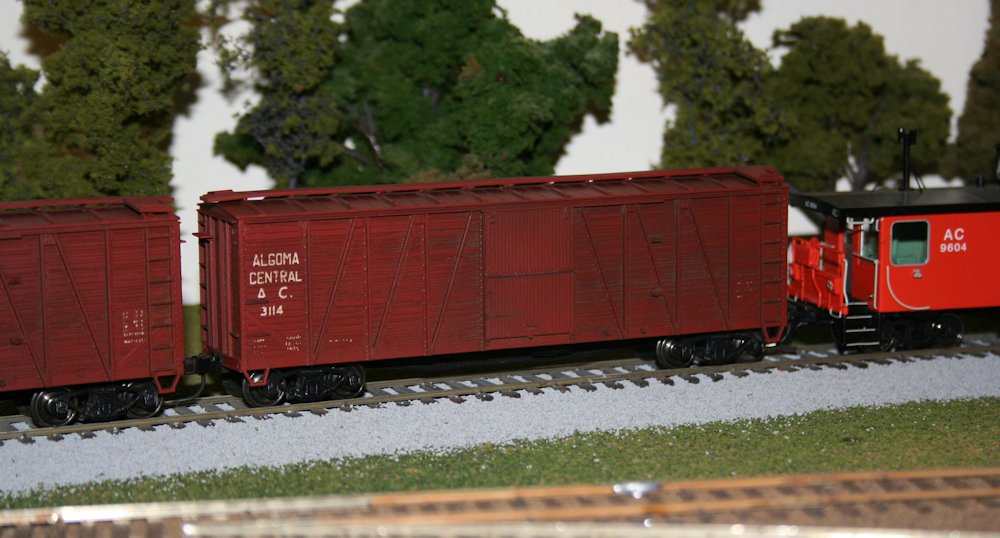
I then gave the three cars a quick spray of Dullcote last night to seal the lettering and weathering. Here’s a pair of the cars mounted back on their underframes and posed on my switching layout with one of my Overland cabooses:

IMG_7291

There’s a few details to be done yet, and the underframe needs some minor detailing and then the frame, trucks and wheels all need to be painted/weathered. The completed car will probably get some additional road weathering along the bottom at that time yet as well, but that’s another day.

AC 8201-8500 series hoppers – Part 3: End platform grating

Here’s a good view of what the end of one of these cars looks like:

http://rrpicturearchives.net/showPicture.aspx?id=1251473

While the stock Walthers model basically just has some generic raised-tread pattern on the end, you can see that the pattern of walkway grating is quite distinctive, and I wanted to capture this.

The following wreck photo also highlights quite clearly how the grating is open, and would be see-through:

http://algomacentral.railfan.net/images/AlgoCenRy/AC_Mile_5_wrk-5_5-14-1980.jpg

If I were only doing one of these cars, I might consider completely cutting away the end platforms and rebuilding them from scratch to have the open grating, however for the sheer volume of these cars that I need, I’ve decided this would be far too much time and effort to be worth it.

I do however wish to at least replicate the tread pattern, which is a big difference from the model. To this end, after disassembling the cars and removing the handrail pieces, I filed the top surface of the end platforms smooth to remove the existing tread texture.

IMG_6616

End platform filed smooth.

I cut the new walkways out of etched brass walkway/grating material. The walkways are a rectangular “Apex” tread pattern. I’ve been using etched brass material from Details Associates. I just used a regular pair of scissors to cut the thin brass sheet.

There’s two parts to the walkway tread on these cars. There’s the grating on the open area of the platform, and an extra bit of grating leading to the end ladder. The platform grating is cut out of the etched material in a rectangle 2.5 by 10.75 scale feet in size. The cut piece should all be whole rectangles, with the “grain” following the width of the car.

The walkway to the end ladder grabs is oriented perpendicular to the platform grating. With the sizing of the rectangles in the Details Associates etching, I cut a strip from the etched sheet 3 rectangles wide; this is perfectly the size to fit between the platform grating and the car body. I then cut these into approx. 1.75 scale foot pieces.

With all the piece cut, I attached them to the prepared underframe pieces using CA adhesive. Very carefully, trying not to glue my fingers to themselves or the car, I used a toothpick to spread the CA across the bottom surface of the grating, and then applied the grating material to the car. For the smaller pieces I used a pair of curved tweezers to move them into position.

IMG_7289

Several finished platforms, with one just filed smooth in the middle.

IMG_7290

Completed walkway/platform grating with the underframe and body fitted together, showing how the walkway accesses the end ladder.

This is the current point I’m at with these cars (well, the 9 I’m [semi-]actively working on). 5 cars now have the grating complete (I just finished a few of them up tonight) and another 4 have the platforms filed and prepared (and actually have for quite some time now).

After I finish this current batch of cars, (I’m hoping to try to bring these 9 all the way through to completion now) I’ve got another 50 or so of these Walthers cars waiting for the same treatment at some point!