Freight Car Friday #4 – NFPX 1511

ACR from Blair 034

In 1974, Newaygo Forest Products opened a sawmill at Mead (mile 275) on the Algoma Central, one of the major outputs of which was woodchips which were shipped to paper mills in Wisconsin. The Algoma Central purchased 90 60′ woodchip gondolas from National Steel Car in 1974 for this service, adding another 23 cars in 1980. By 1985 however, Newaygo had shut down the Mead mill, and the majority of the AC’s woodchip cars were sold to Newaygo and used in services on other routes.

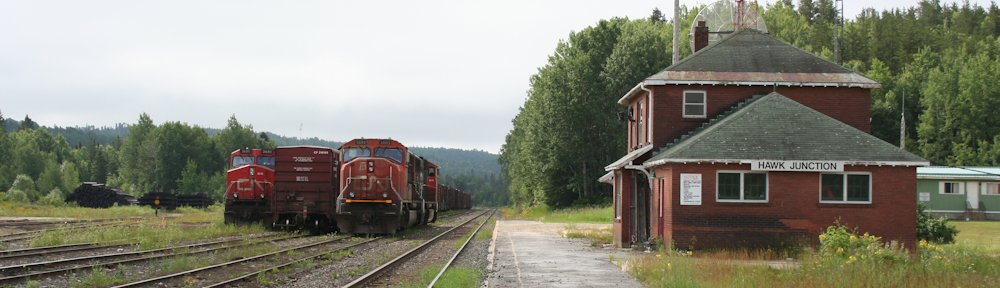
Here’s NFPX 1511 (former AC 1511, one of the 1980 built cars) at Steelton yard in February 1999 with a load of woodchips from a lumber mill at Calstock, Ontario, on the Ontario Northland Railway near Hearst. (Photo courtesy of Blair Smith)

Scratchbuilt Ends for 2301-2373 Series Flatcar – Part 2

This week I managed to take the next step forward on the ends for my (current) quartet of 40′ end-rack pulpwood flatcars, finishing up the major framing on the end of the rack.

IMG_1435

Note that the inner-most vertical members on the prototype are Z angle, not square tube or bar stock like the rest of the frame. Unfortunately I couldn’t find any commercially available Z strip in the .040″ thickness I needed to match the rest of the framing; Plastruct makes some down to 1/16″ but that’s still far too large by at least 50%.

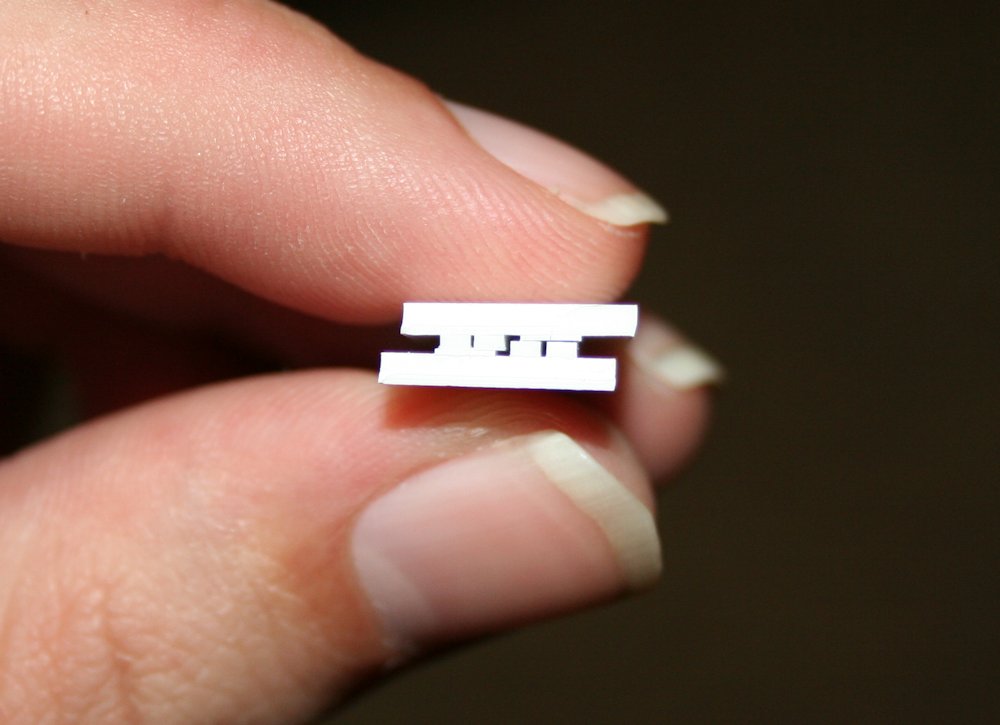
What to do when you can’t get the angle stock you need? Well, simply fabricate your own out of plain strip. To make the fabricating process easier, cleaner and more precise, I built a jig using a couple sizes of styrene strip sandwiched between a bit of scrap styrene for a top & bottom plate, with a space in the middle to feed through a pair of .010x.030″ strips (top and bottom flange) and a .010x.020″ (middle web) strip through the jig.

IMG_1427

Once the cement on the jig set, I could fabricate the Z stock by inserting the strips into one end of the jig and slowly pushing them through out the other side, about a quarter to a half inch at a time and cementing them together with liquid cement applied with a very fine brush into the joint between the strips.

IMG_1417

The result is a nice, solid structural shape that looks about as good as any solidly extruded commercial offering, and would have been extremely difficult or impossible to do free hand at such a small size.

Photos of the Line

I’ve been spending some time recently on a project to go over my trip photos from my ride on the Tour of the Line and using Picasa and Google Earth to geotag the images from along the line.

I’ve recently uploaded my Algoma Central photos to a Google+/Picasa Web album, which you can check out here. The album contains over 750 images, from several visits to the former ACR in 2004 (Sault Ste. Marie only), twice in 2013 (Sault/Searchmont/Hawk Junction by car in the summer, and the Tour of the Line trip in the fall), and 2014 (Agawa Canyon Tour Train trip) as well as a few older 1981 photos from my slide collection.

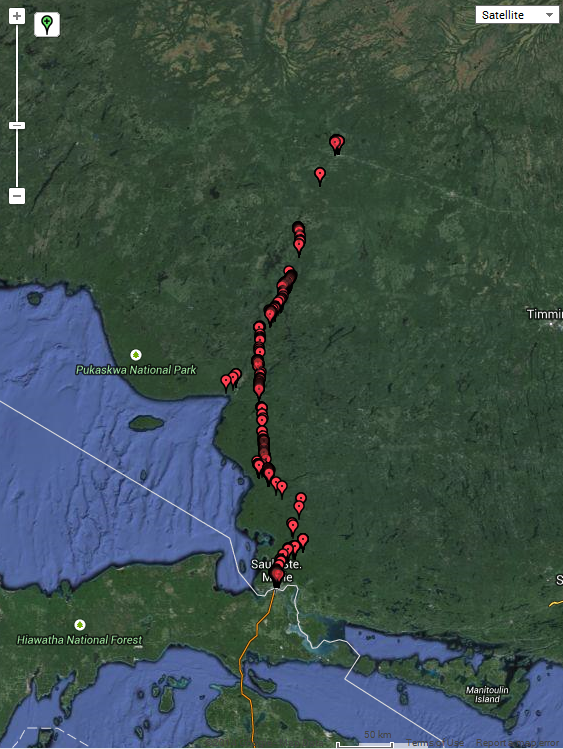
Every one of the posted photos in the album is geotagged with it’s GPS coordinates, or at least as close as I can figure them. I was actually able to figure out very close locations for the majority of my photos by fixing certain known locations, and following the line on satellite imagery and reviewing photos in sequence, and noting and comparing features in the satellite imagery and an old ACR track diagram to my photos and the sequence in which they were taken.

Geotag Full Railway

GPS location information on 750+ images in my Picasa album.

(Note – if you’re viewing the album in a mobile browser, that version of the web page doesn’t seem to provide any way of seeing the location information for a selected photo. If you’re viewing on a regular desktop browser, expand the Photo Details section at the right to see the little key map.)

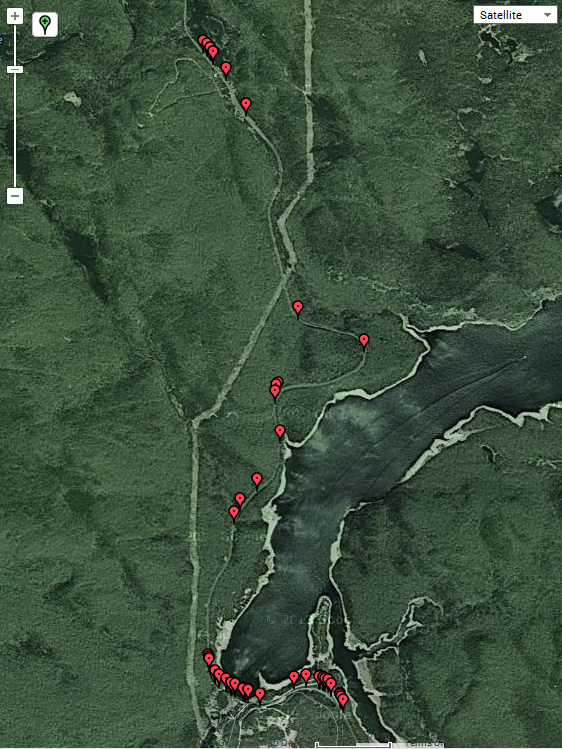
Geotag Montreal Falls-Hubert

Location detail, Montreal Falls to Hubert.

Geotag Agawa Canyon

Location detail, Agawa Canyon and Eton.

For a neat visual representation, click here to download a Google Earth .KMZ file (23 Mb) that overlays a small thumbnail of each image in the entire album on the map and satellite imagery.

I wanted to make more of my photos from the Tour of the Line available to other ACR fans and modellers, and I think the geotag information should really help relate everything together.

Early Samples of Bowser’s HO Scale Canadian SD40-2 Displayed

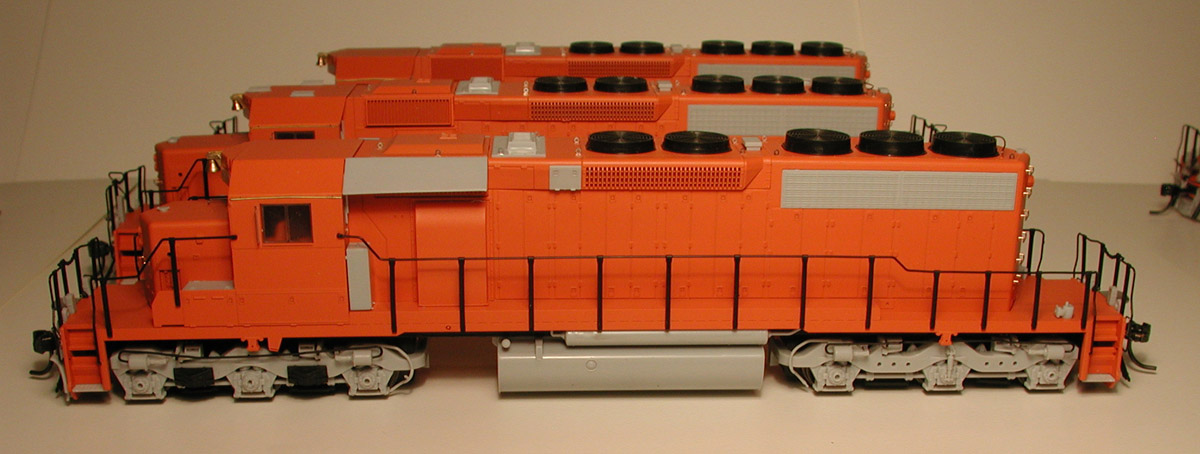
This week Bowser posted photos on their website (and also emailed out to various contacts) of pre-production sample models of 11 different variations of their upcoming Canadian SD40-2 HO scale model.

All of the models are patterned after the versions built by General Motors Diesel Division in London, ON and represent the distinctly Canadian features that were unique to units built in Canada (vertical style ladder steps and modified handrails to match) and typical to Canadian railways (headlight in nose, cab front bell, class lights in single or 3-light groups above the number boards, single rear back-up headlight on most versions, railroad specific plow/pilot and ditch light configurations, snowshields (on certain versions) etc.).

Railways and versions represented by the 11 variants include Canadian Pacific (multiple variants), British Columbia Railway (at least 2 versions), Ontario Northland (non-dynamic brake), Quebec, North Shore & Labrador (with extra large fuel tank) and last but not least, Algoma Central. (I foresee an order for six units in my future…)
DSCN6282

Pre-production sample, HO scale Algoma Central SD40-2. Bowser Manufacturing Company model and photo.

This appears to be the AC version, with a pair of CP versions in the background. (Specific features: single class lights on numberboards, snow plow, RR-specific M.U. electrical connection stands, pilot lift rings, pilot mounted ditch lights, snowshields, flat-top radiator and dynamic brake fans, electrical contact access doors on side of dynamic brake housing, straight turbo exhaust, wire radiator grilles, single rear backup headlight.)

Check out the photos of all 11 versions on Bowser’s web site here:

SD40-2 Page 1
SD40-2 Page 2